British Columbia’s Naramata Bench Sub-GI
One of B.C.'s Pinot Noir Hidden Gems

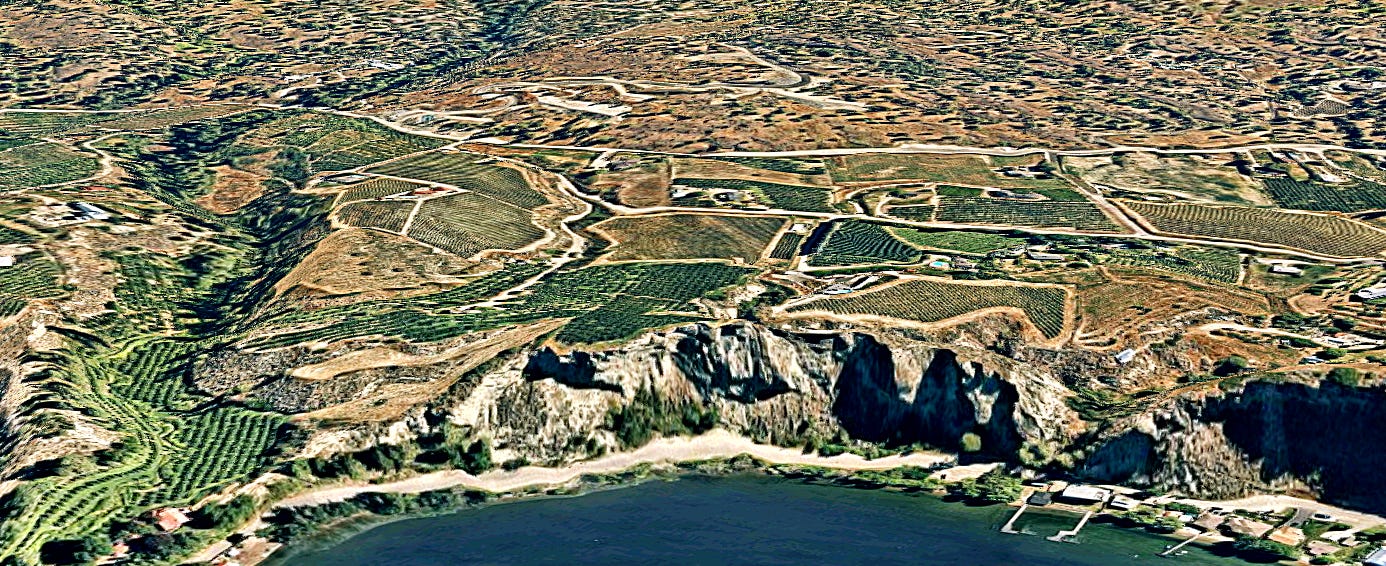
Overview B.C.’s wine regions are divided into nine Geographical Indications, that function like appellations in other wine countries. These GIs are determined by analyzing factors such as soils, climate conditions, landforms, bodies of water, and geographical boundaries. One of these, the Okanagan Valley GI is further broken down into sub-Geographical Indications (sub-GIs). Established in 2019, the Naramata Bench Sub-GI stretches over an area of 3650 hectares and is located on the eastern shore of the southern tail of Lake Okanagan.
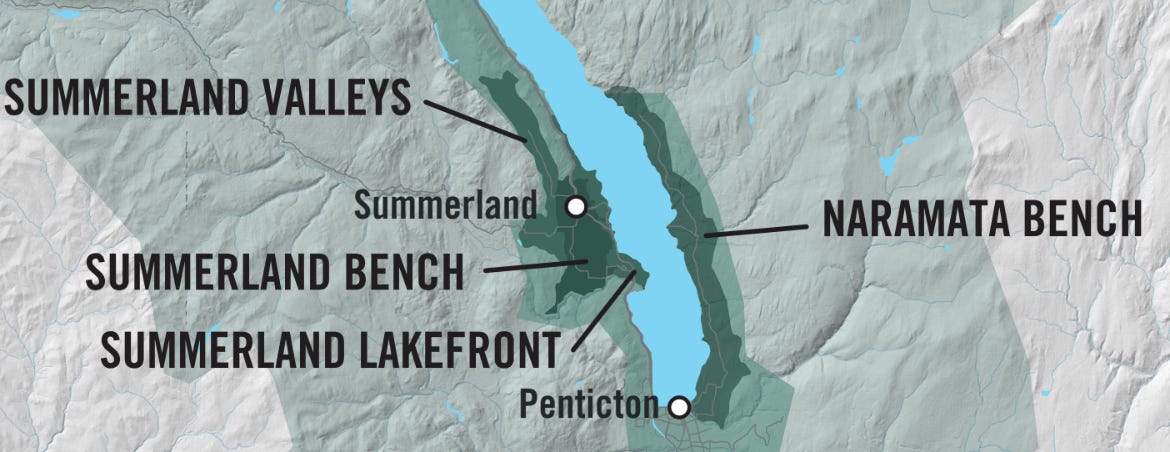
Geographical Boundaries Its boundary begins in the very southeast corner of the lake, takes a paring off the northeast corner of the city of Penticton, by running along Penticton Creek and continues inland for two kilometers before heading northward. With Okanagan Lake providing the western border, the eastern boundary line runs north, paralleling the shoreline, forming an arable margin whose width varies between one and three kilometers, ending about twenty twenty-five kilometers north at Sebastian Farms vineyards next to Okanagan Mountain Provincial Park.
The sub-GI has three dimensions, since the eastern boundary follows the contour of the valley wall at an elevation of between 650 and 700 meters. The highest vineyards in the sub-GI are at 685 meters. At this upper elevation range, grape production is less viable. Growing Degree Days decrease at a rate of approximately 100 per year for every 100m rise in elevation. So, with a span of about 300 m between the lowest and highest portions of the sub-GI, the annual GDD range goes from 1400 at lake level down to 1100 at its higher reaches. The yearly frost-free days vary from 195 at the lowest elevation to 160 at the highest.
Two Soil Landscapes Within the Naramata sub-GI there are two distinct soil landscapes called Glaciolacustrine and Mixed Sediments that adjoin each other along the whole north/south length of the sub-GI, creating two parallel bands. They step progressively back and up from Lake Okanagan, with overlapping boundaries and altitude variations.
Glaciolacustrine Soil Landscape The bulk of the Naramata sub-GI vineyards are in the Glaciolacustrine soil landscape, with most located south of Naramata village. In general, the soils in the glaciolacustrine landscape are termed Penticton soil loam. It features a topsoil with rich organic matter as well as pockets of clay and gravel. The soil here is well drained but also has a relatively high water-holding capacity. The underlying parent materials are alkaline and contain calcium carbonate.
Mixed Sediments Soil Landscape This second landscape features very different underlying geological origins that distinguish it from its glaciolacustrine partner. It sits at a higher elevation in part, on rocky, gneiss outcrops. The underlying bedrock determines its landforms and the more variable soil texture in this landscape is coarser with a generally greater degree of stoniness.
Climate Sitting in the middle of the sub-GI, Naramata Village is located at a cooler climate 49.59° N latitude, like the city of Reims in Champagne. Yet, at its lower elevations, with proximity to the moderating warmth of Lake Okanagan, the area has a growing season of around 195 days, a mean annual temperature of 9.5 °C and racks up 1400 annual growing degree days. Naramata Bench is an optimal area for growing wine grapes and can have more frost-free days than more southerly vineyards in the Okanagan Valley such as Oliver and Osoyoos. However, the cooler nights help retain acidity and freshness in the wines.
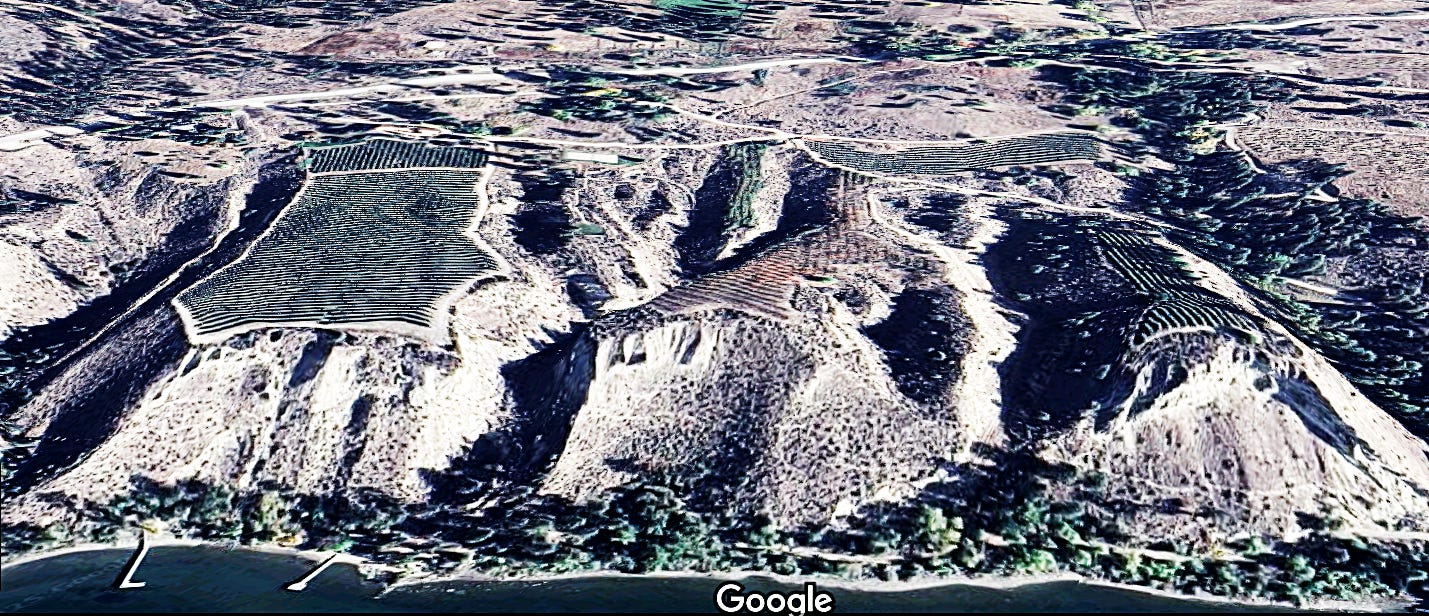
Exceptional Range of Vineyard Growing Conditions Added to the factors of latitude, altitude and proximity to water is the unusual and at times, fantastical topography of the Naramata Bench tablelands. The once-were-lake-bottom fine silt, sandy and clay sediments composing the area were vulnerable to erosion from melting glacier streams as the ice retreated thousands of years ago. Even today, these sedimented soils can become saturated and create landslides or slope failures. The remarkable result is that ranged along the northern portion of Naramata Bench, you can see gentle, undulating slopes sharply dissected by cliff-like gullies and escarpments, where water has cut through the erosive soil. In places the resulting landforms, are isolated, flat-topped headlands occasionally crowned with a carpet of vines. These tall promontories often have near vertical walls where the underlying sedimentary layers can be seen. The overall result is an irregular jumble of vineyards subject to a wide variety of geographic influences.
The varied landscape position and topography of Naramata sub-GI vineyards contribute to a diversity of mesoclimates that affect the nature and style of the resulting wines. Variable airflow patterns through the area’s gullies and escarpments creates a range of daytime temperatures and nighttime cold air drainage that can strongly affect both the number of growing degree days and the annual frost-free period for a particular vineyard.
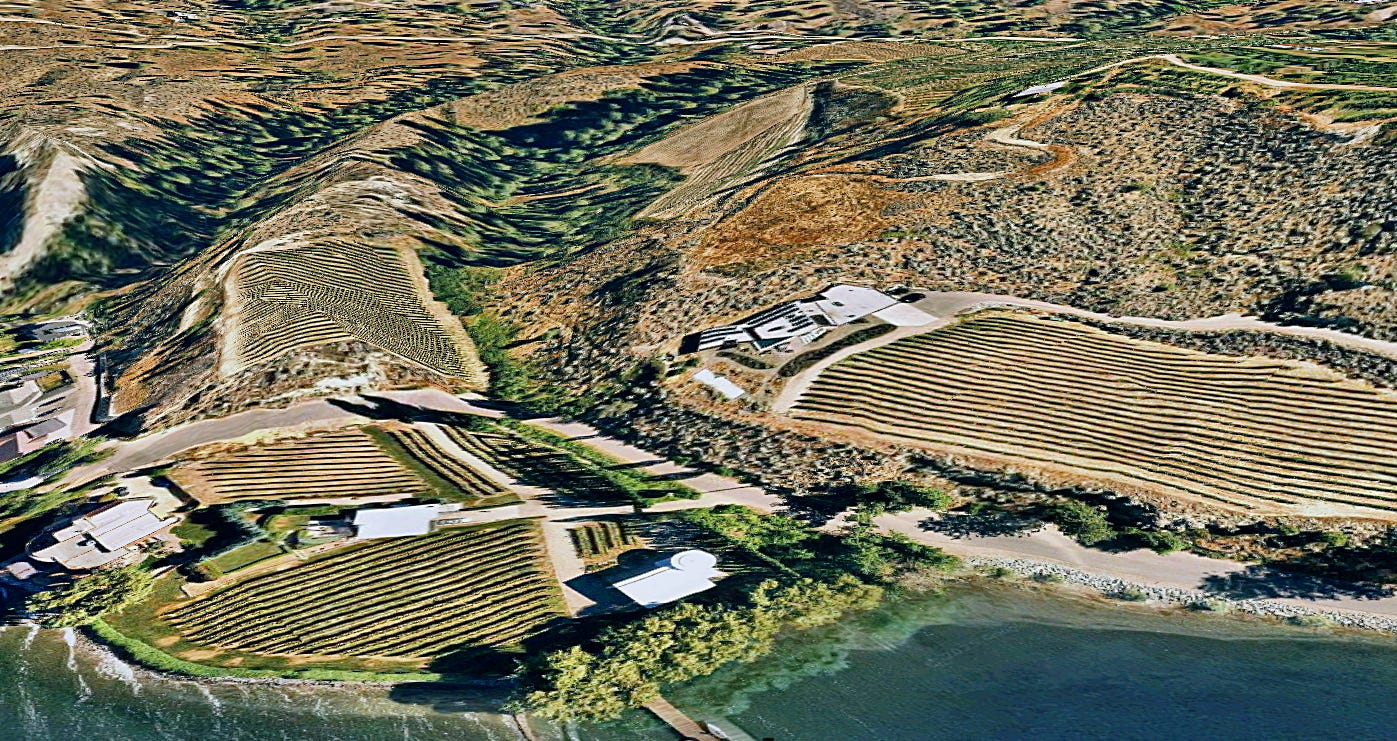
Viticulture Over 50 types of grapes are grown in the Naramata Bench sub-GI and include later ripening varieties such as cabernet sauvignon that demonstrate versatility of the geography, making it an interesting playground for winemakers. Merlot, pinot gris, chardonnay and riesling are the most widely planted with pinot noir representing around 10% of plantings.
A Pinot Noir Hidden Gem Pinot noir is very much at home in the Naramata Bench. Of the forty-five or so wineries within its boundaries, 75% of them make a pinot noir. Numerous wineries outside the sub-GI source Naramata Bench vineyards for their pinot noir wines. The quality of the pinot noirs here is very good and often exceptional. Naramata Bench wineries won seventeen medals including Platinum at the recent 2025 National Wine Awards of Canada.
B. C. pinot noirs from the Okanagan Valley and other B.C. sub-Gis fly under the radar globally because the wineries are boutique sized with case production for individual wines often under 400 cases, leaving little to export. Nevertheless, pinot noirs from the Naramata Bench and other British Columbia sub-Gis compare well in terms of quality and variety with those from better known pinot producing areas such as New Zealand, Oregon and France. The world just hasn’t found out yet.
Thanks Bill!
Thanks Sam. Me too, wish we were in closer proximity.