Summerland Valleys Sub-GI
Last of a series on pinot noir in the three Summerland Sub-GIs

Summerland Valleys Sub-GI
Welcome to the latest edition. I have added a new audio feature, so you can now choose to listen to the entire newsletter read by me, by just clicking above. I welcome your comments.

Overview
The community of Summerland sits next to Highway 97 on the Eastern side of Lake Okanagan, directly across from the town of Naramata and its adjacent necklace of wineries. It sits in the crater of an exploded volcano that sent enormous lava chunks South and West, including what is now Giant’s Head Mountain. In the several thousand years since, glaciers ran over the lava chunks and volcanic domes in the area, scouring and sculpting them into the rounded summits now arrayed around Summerland. When the glaciers retreated, sediment from glacial meltwater buried the terrain below the 500 m elevation about ten thousand years ago, leaving most of the valley bottom filled with gravel, sand and mixed sediments.
BC’s G.I. & Sub-GI System
Established in 2018, under the regulation of the British Columbia Wine Authority, an appellation system was created that divided its wine regions into ten ‘Geographical Indications’ (GIs), and also delineated unique growing areas within the GIs, as “sub-GIs”. Sub-GIs can be noted on wine labels and indicate that a minimum of 95% of the grapes in the wine were grown from the specified region. British Columbia now features 21 Geographical Indications consisting of 10 GIs and 12 sub-GIs.
Summerland is slightly unusual in that three contiguous sub-GIs, Summerland Lakefront, Summerland Bench and Summerland Valleys, were created, and several more were also initially sought. This was due to the complex geology and resulting soil types in the area as well as proximity to the lake’s moderating influence, altitude variation, narrow shielded valleys, microclimates and other factors. Variations in soils were also very instrumental in the sub-GI process. These variations included soil type, structure, texture (sandy or coarse), and geological origin.
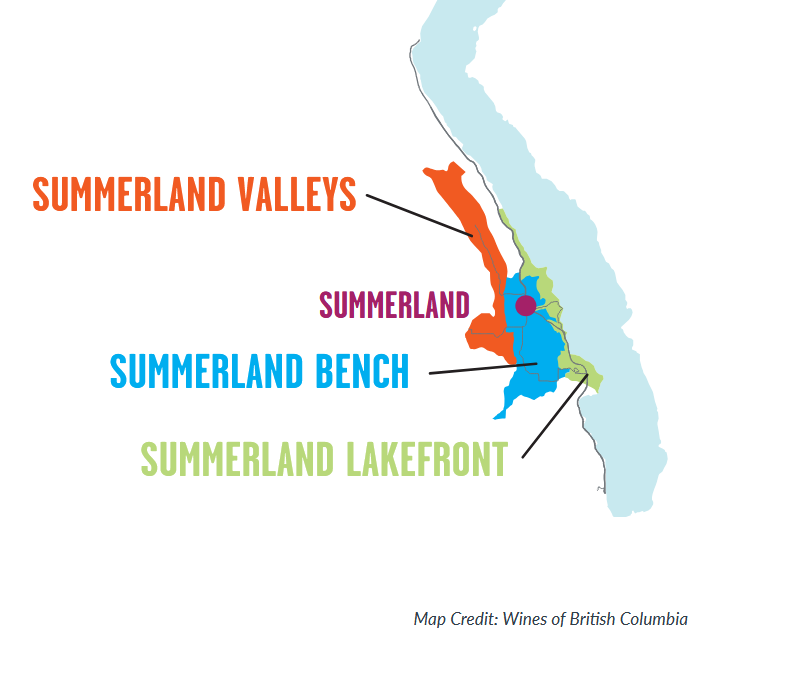
Summerland’s location in the Central Okanagan, North of Okanagan Falls, South of Kelowna and Lake Country and proximal to Lake Okanagan puts it well in pinot noir’s comfort zone. High quality pinot noir is currently being made in all three sub-GIs.
The three sub-GIs step progressively back and up from Lake Okanagan, with overlapping East/West boundaries and distinct altitude variations.
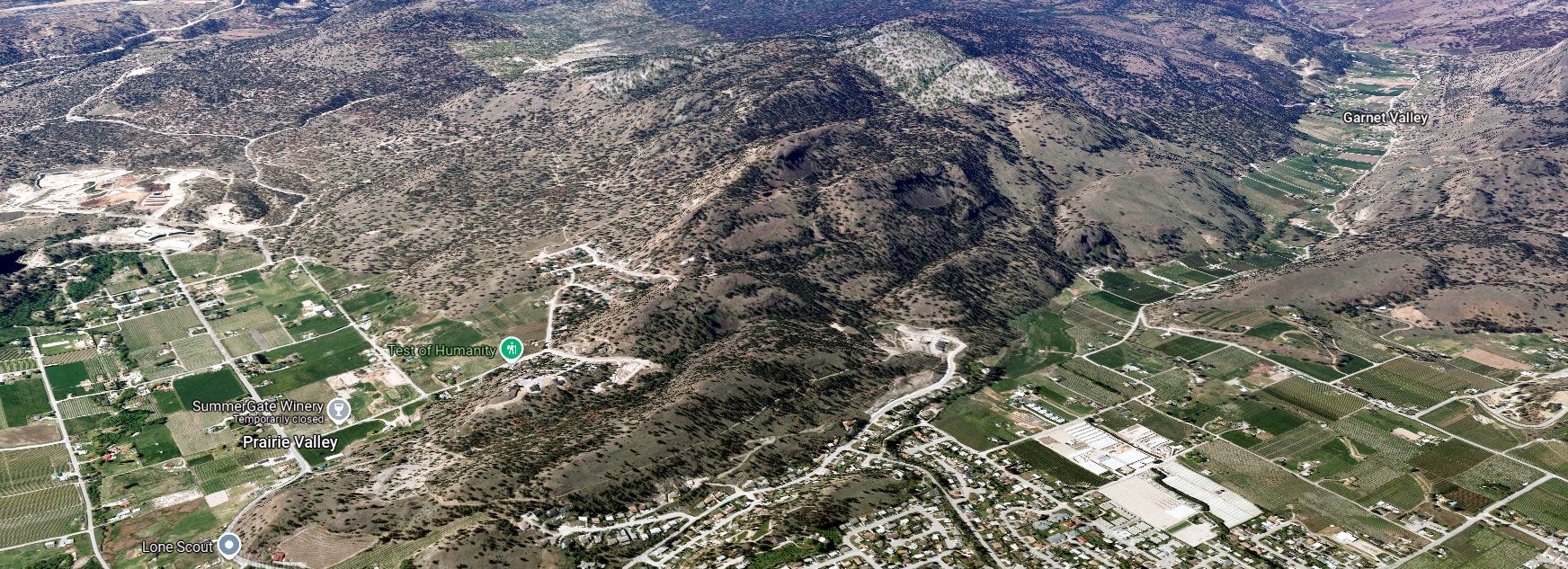
Summerland Valleys sub-GI This sub-GI is a long finger of about 1,350 hectares that begins West of the town of Summerland and runs North, paralleling Lake Okanagan. It includes parts of Prairie Valley as well as Garnet Valley. Of the approximately 55 hectares under vine, either planted or in production, roughly two-thirds are located in the Garnet Valley and one-third in Prairie Valley. Elevations range from 500 to 700 meters, and it has some of the highest vineyards in the Okanagan. Other factors in this region include slope angle and the presence of bedrock outcrops.
Complex Soils As in most of the Okanagan Valley, the surface geology of the GI is very complex. In Summerland Valleys, the most important forces forming the geology and soils of the area proceed from the glacial period that occurred approximately 10,000 years ago. The glaciers sculpted existing landforms and their eventual melting, laid down a variety of alluvial deposits. These, along with wind-blown fine sands, glacial till, silt deposits and decomposed organic materials created the parent materials for an array of often stratified soil types which can occur in close proximity within the sub-GI.
Climate This sub-GI has fewer growing degree days and a shorter frost-free period than the other Summerland sub-GIs. Altitude and airflow contribute to make this a very cool climate area. The Garnet Valley area in particular stands out in the three Summerland sub-GIs due to higher elevations, cooler climates and its isolation from the influence of Lake Okanagan.
There is some slight variation in climate between the two valleys with the Eastern side of Prairie Valley being more open to the warming airflow influence of Lake Okanagan. The cool climate factors, particularly in Garnet Valley, allow for sparkling wine production as well as providing the potential to produce ice wine on the sub-GI’s lower slopes. But recent trends to generally warmer winters and shoulder seasons may eventually contribute to a wider range of viticultural possibilities.
Overall, the variations in elevation, air drainage, slope position, and slope direction set up an array of site conditions best suited to growing white wine grapes along with cool climate loving pinot noir—the most planted variety. Given pinot noir’s versatility, winemakers can choose to make sparkling, rosé, white, or red wine from it depending on the ripeness of the vintage.
TWO VALLEYS This sub-GI includes Prairie valley and Garnet Valley. Both valleys begin at the Western edge of the town of Summerland.
Prairie Valley The Southern portion, the roughly triangular Prairie Valley, shares a boundary with the Summerland Benches sub-GI to the East of it. Prairie Valley is a mainly agricultural area containing both vineyards and orchards. Vineyards cover a relatively small area of about 20 hectares, and vineyard expansion is limited to some degree due to the peaty nature of the soils which include decomposed organic matter. This tends to make the soils less free-draining, and, therefore, somewhat less suited for vineyards than other parts of the sub-GI.
Garnet Valley – Even Cooler Climate The long, narrow Garnet Valley begins where a ridge rises in the agriculturally green Northwest corner of Summerland, then forks out and stretches North, running parallel to Lake Okanagan, but separated by a mountain ridge that continues North towards Peachland. The two valleys are linked by land along the base of Cartwright Mountain. Garnet Valley extends from the lower slopes of Conkle Mountain in the South to just South of the Garnet Lake dam in the North.
In places, this agricultural valley can be steeply tilted, undulating, or forested and grows narrower at the Northern end. The steepness of the hillsides, slope direction, elevation range, and the shade provided by the embracing mountain ridges makes the Garnet Valley a hospitable, varied, and interesting terrain for pinot noir and is already the source of some very interesting wines that show great promise.
The climate in this part of the Summerland Valleys is distinctly cooler than the vineyard area of the Summerland Bench sub-GI despite them being only five kilometers apart and a similar two-kilometer distance from Lake Okanagan.
The upper reach of Garnet Valley has about 200 fewer growing degree days than Summerland Bench (approx. 1100 vs. 1300) and the frost-free period is 40 days shorter (e.g., in 2019, it was 154 days vs. 197). The climatic difference between Garnet Valley and Summerland Bench is actually similar to the difference between Summerland Bench and the Southernmost reach of the Okanagan Valley in Osoyoos.
The much cooler temperatures are largely the result of elevation difference and landscape position, with the latter related not only to the mountain ridge isolating the valley from the warming influence of the lake but also to the valley floor, which is subject to cool nighttime air flows that depress daily mean temperatures and shorten the frost-free period.
The unique Garnet Valley climate exists in what is already a cool climate area and clearly affects grape ripening potential but many of the world’s most interesting wines come from similar climates.
The advantage of the cool growing season and diurnal range in the valley is that the wines retain natural, vibrant acidity and fruit aromatics. This also makes the sub-GI well suited to viticulture for sparkling wine production. Vineyard sites on frost-prone lower slopes and the valley floor can also be used to produce ice wine.
There are currently just four wineries in the Summerland Valleys sub-GI, two in Prairie Valley (Pamplemousse Jus and SummerGate Winery) and two in Garnet Valley (Garnet Valley Ranch and Solvero Wines).
The two most noteworthy pinot noir-producing wineries, are those located in the Garnet Valley.
Solvero Wines
It was in the Garnet Valley that the Sartor family, Andrea and Bob Sartor and their son Matt, dreamed that vineyards could flourish. Fittingly, the initial conversation was over a glass of pinot noir. In 2014, they acquired thirty acres of land 20 minutes North of Summerland that was a steep, forested mountainside. It took two years to clear the land and prepare it for planting. The 2019 pinot noir is their inaugural vintage.
The success of the initial wines also rests with their experienced and talented winemaker, Alison Moyes. Her winemaking resume in the Okanagan Valley includes five vintages at Stoneboat Vineyards and six vintages at Liquidity Wines. Having tasted the wines from both during her stints there, I found it notable how consistently she was able to express very different pinot noir terroirs through a range of vintages at each property.
From 2019 to 2022, Solvero’s pinot noirs were sourced from two estate vineyards, a ten acre parcel adjacent to the winery at an elevation between 600 and 650 meters and a four acre parcel along Happy Valley Road in the nearby Summerland Bench sub-GI at an elevation of approximately 500 meters.
A third estate pinot noir vineyard of four acres planted in 2023, is also located near the winery but near the Garnet Valley bottom.
Additionally, beginning with the 2023 vintage, Solvero will be sourcing fruit from the Kozuki Family vineyard located in the Summerland Lakefront sub-GI. This vineyard, planted in 2008 was previously called the Golden Retreat vineyard and was bottled as a single vineyard pinot noir utilizing clones 667, Pommard, 115, and 777, by Spearhead Winery. Solvero will be releasing their first pinot noir reserve wine from the 2023 vintage based exclusively on Kozuki Family vineyard fruit.
Notes on the Wines
Solvero Pinot Noir 2019
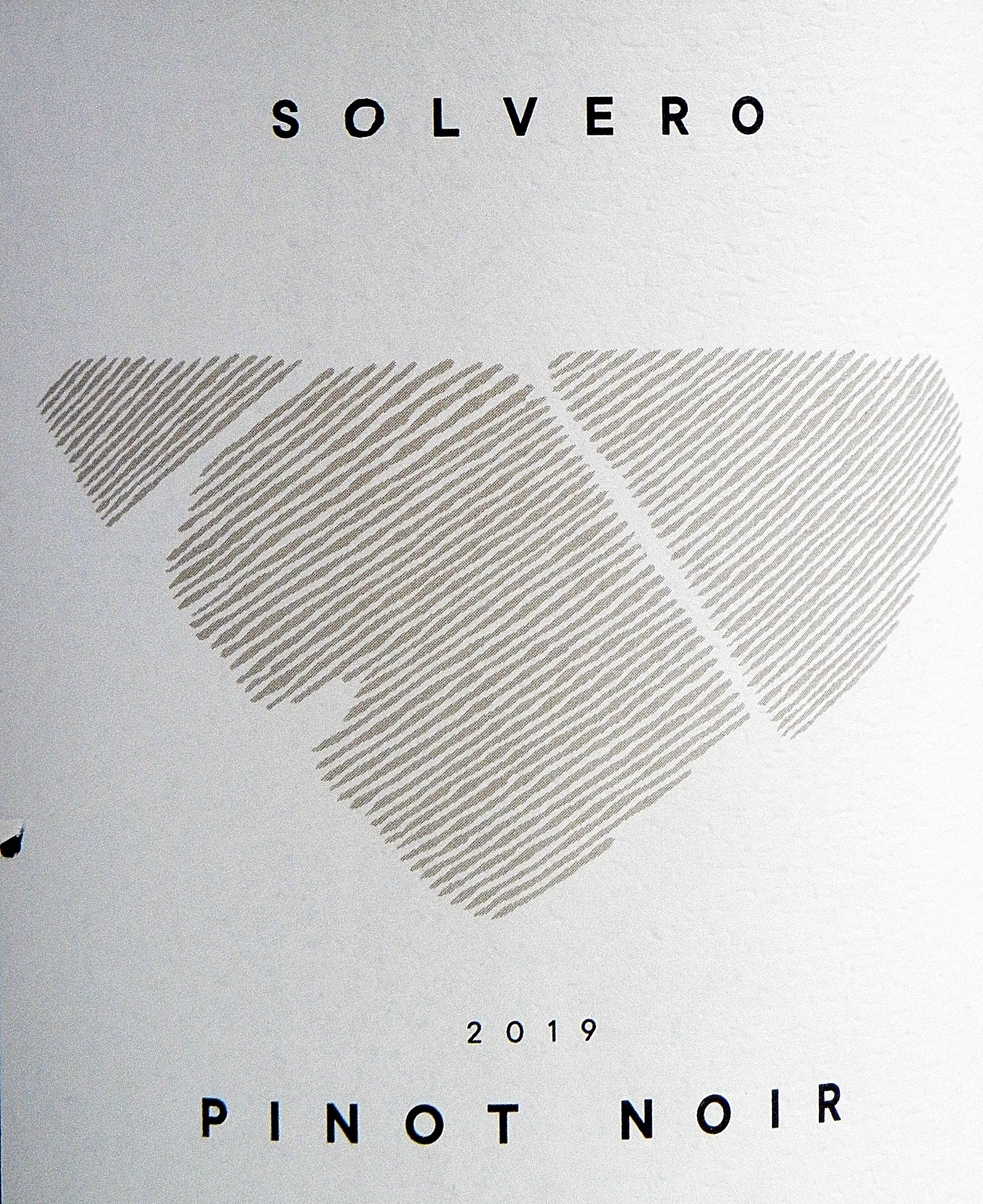
Dark cherry, licorice, molasses, cookie spices, and some winning strawberry notes in the finish, fingerprint this wine. The fruit amplitude holds well into the long finish. A complementary acidity contributes to balance a remarkably restrained 12.2%. Cropped at 1 ton to the acre, the wine spent 12 months in barrel, (25% new). The clones involved were 115, 667, 777, Swan, 828, Pommard, and 943. C+ to B- ~ 89 points
Solvero Pinot Noir 2020
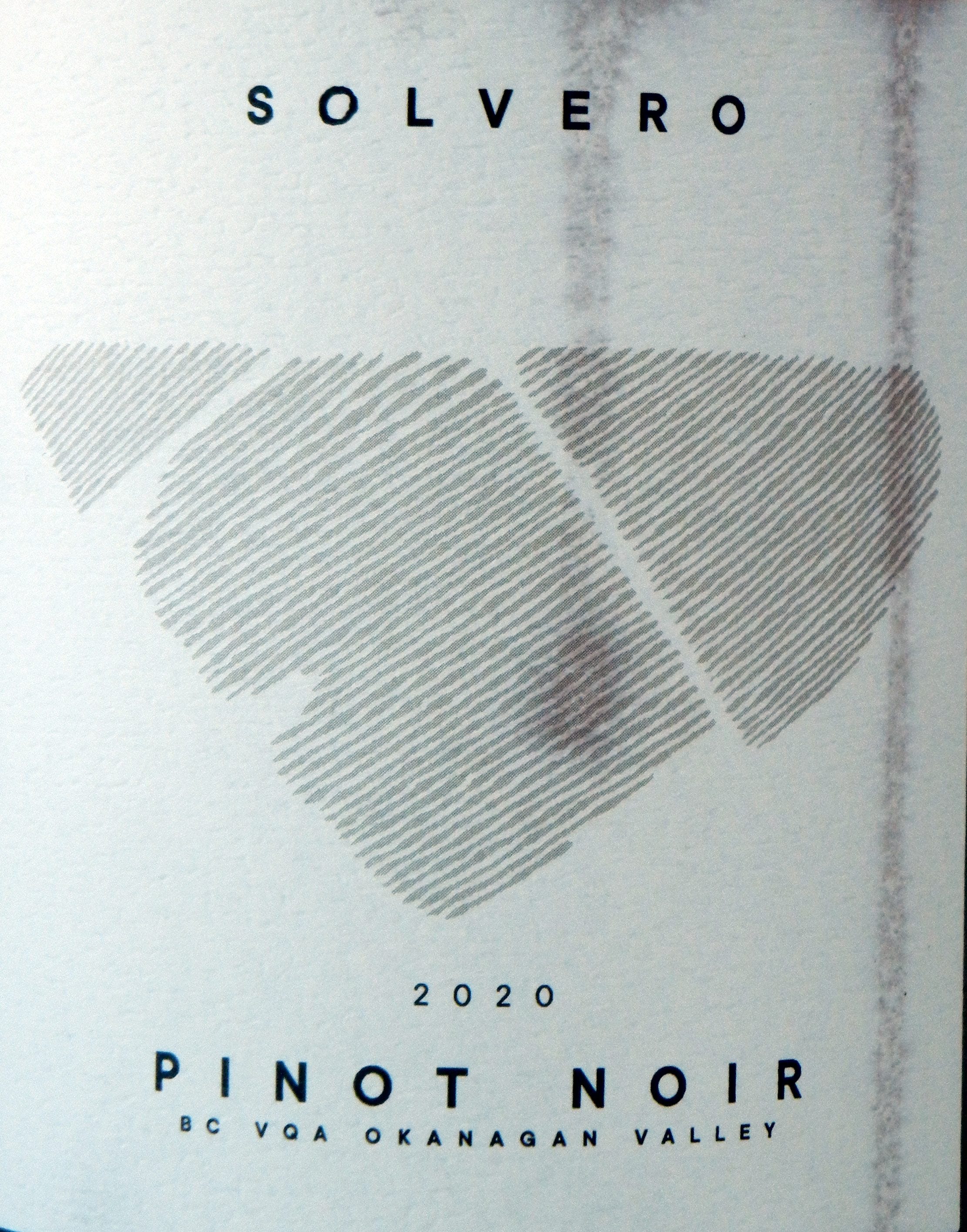
Initially, very shy and light with elusive notes of raspberry, red plum, chokecherry and violets, ending with a light yet flavourful wave that emanates gently for a long while. What stands out here is the lightness of body combined with the airy clarity of a very persistent, berry tinged finish. As it opened up, the fruit flavours of dark raspberry and mulberry grew in intensity along with smooth, ripe tannins.
The wine is sourced from two vineyards, their Garnet Valley estate vineyard as well as an estate vineyard along Happy Valley in the Summerland Bench sub-GI. The lightness and transparency here might reflect young estate vineyard vines (planted 2016) as well as the very cool climate, the hand of the winemaker and the exceptional altitude there of 600 to 650 meters. B- ~ 90 points
Solvero Pinot Noir 2022
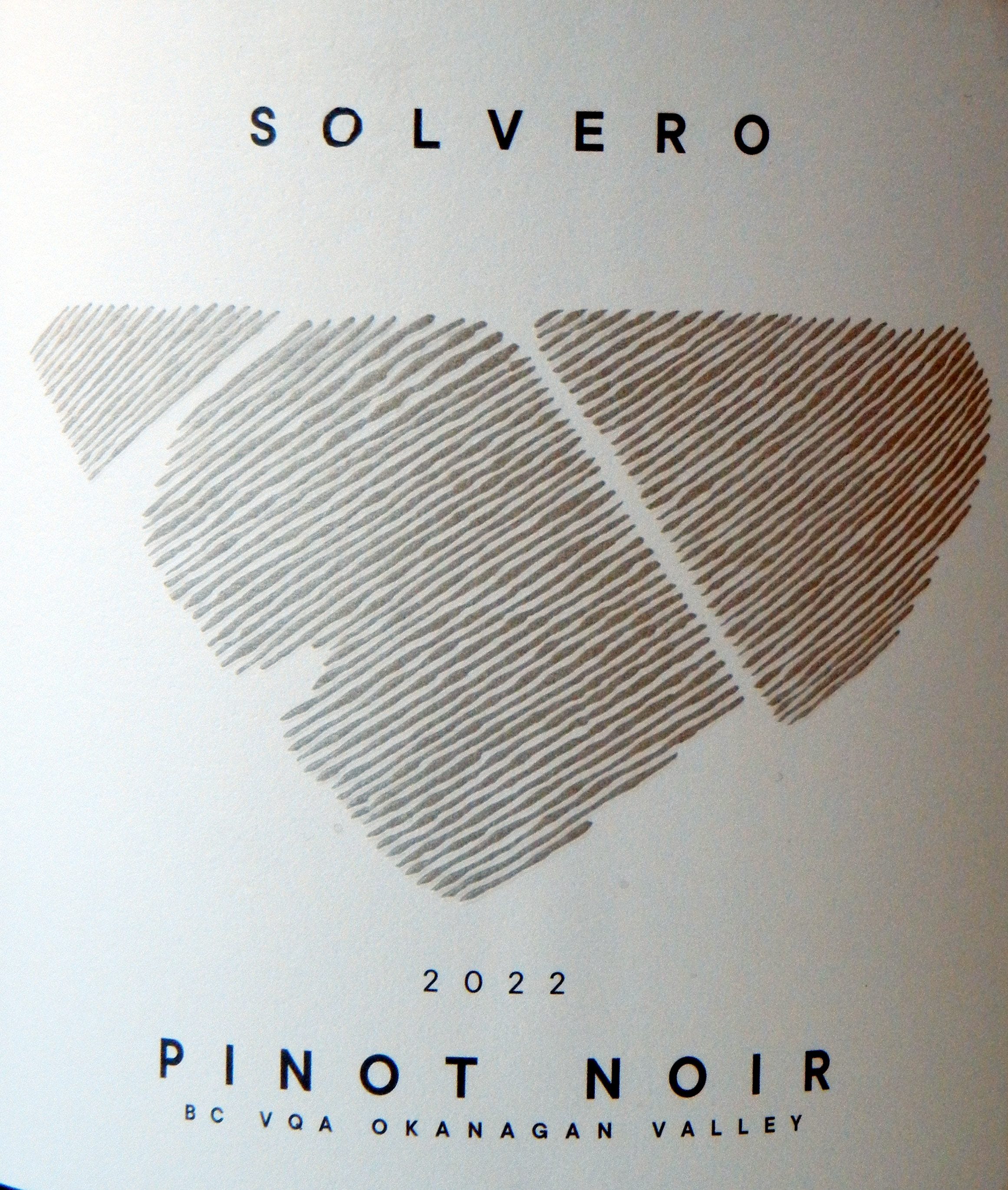
Starts with herbal notes including ripe cherry, baking spice, lilac, bramble, dried leaves and tobacco. This follows through on the flavours showing autumn leaves, mulberry and leaf smoke. Overall very savoury flavours, quite long and balanced with an airy finish that holds steady and lingers. B- ~ 90 points
Garnet Valley Ranch
This winery is a project of Haywire Winery (formerly Okanagan Crush Pad) and is located toward the Northern end of Garnet Valley, though it is still just about a 15 -minute drive from downtown Summerland. The first blocks were planted in 2014, and there are currently 18 hectares under vine, all certified organic, with a variety of grapes including pinot noir.
The individual block sites were selected and designed by the Chilean terroir consultant Pedro Parra. The vineyard blocks are located between 600 and 680 metres above sea level, making this one of the highest elevated vineyard sites in the Okanagan Valley. Their first pinot noir was released in 2017.
Garnet Valley Ranch Pinot Noir 2022
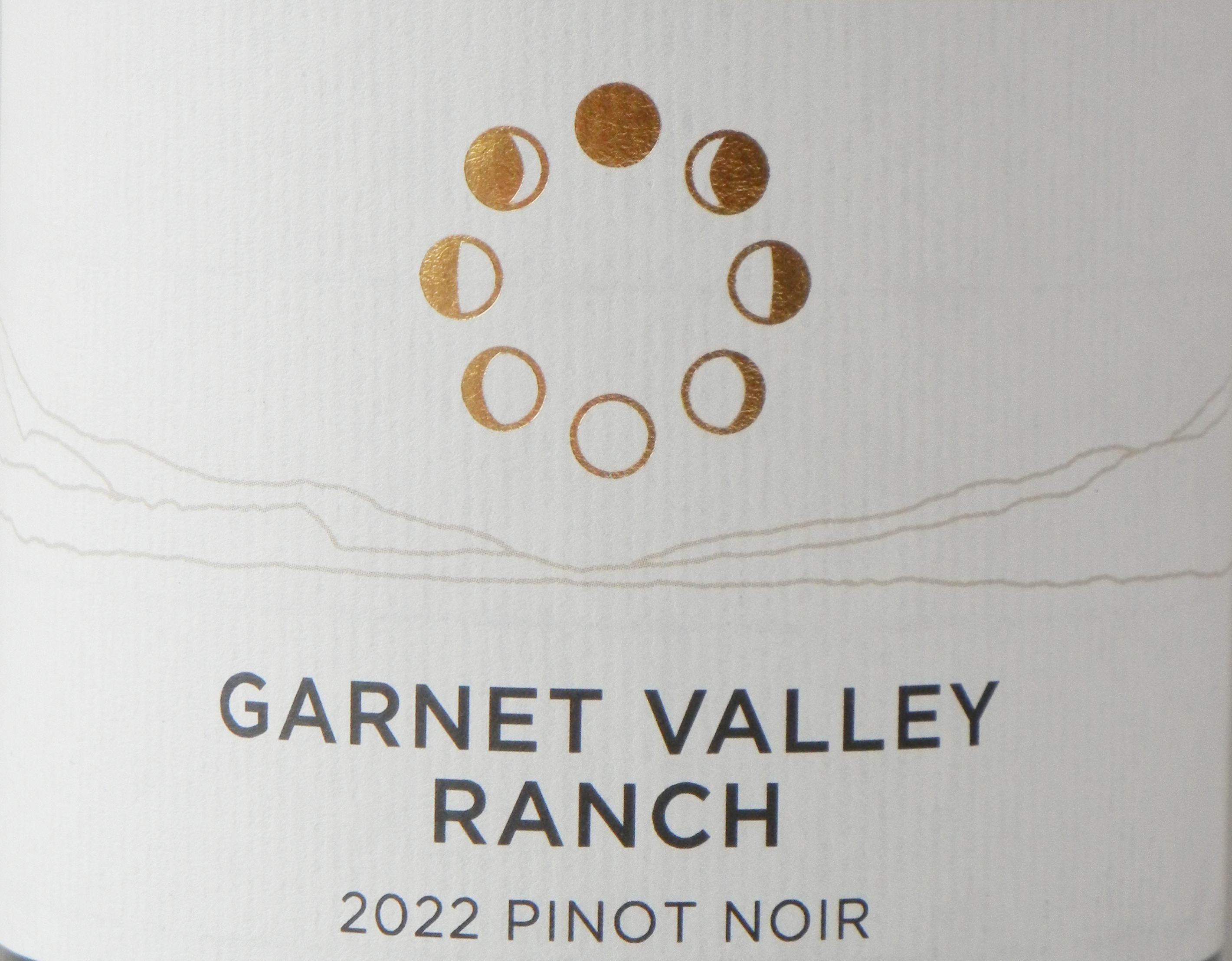
The nose presents underlying notes of mulberry, pomegranate, dried twigs, raspberry and cloves. Understated, savoury fruit overall with a touch of tannic grip at first. There's purity of fruit essence here a piney, herbal mix, joined later by some vanilla and dried leaves. It's light but immediate and elemental, opening to a mid-palate and a drifting, balanced finish, of real elegance and transparency. B ~ 91 points
To find out more about British Columbia pinot noir or to subscribe to the newsletter, go to BCpinotnoir.com